Why Your Car Vibrates While Driving (Step-by-Step Diagnostic Guide)

October 22, 2025

Thumbnail

Content outline

Intro

Feeling your steering wheel or seat vibrate while driving can be alarming.
Sometimes it’s as simple as a tire balance issue—but it can also mean a deeper problem like an engine misfire or worn suspension parts.
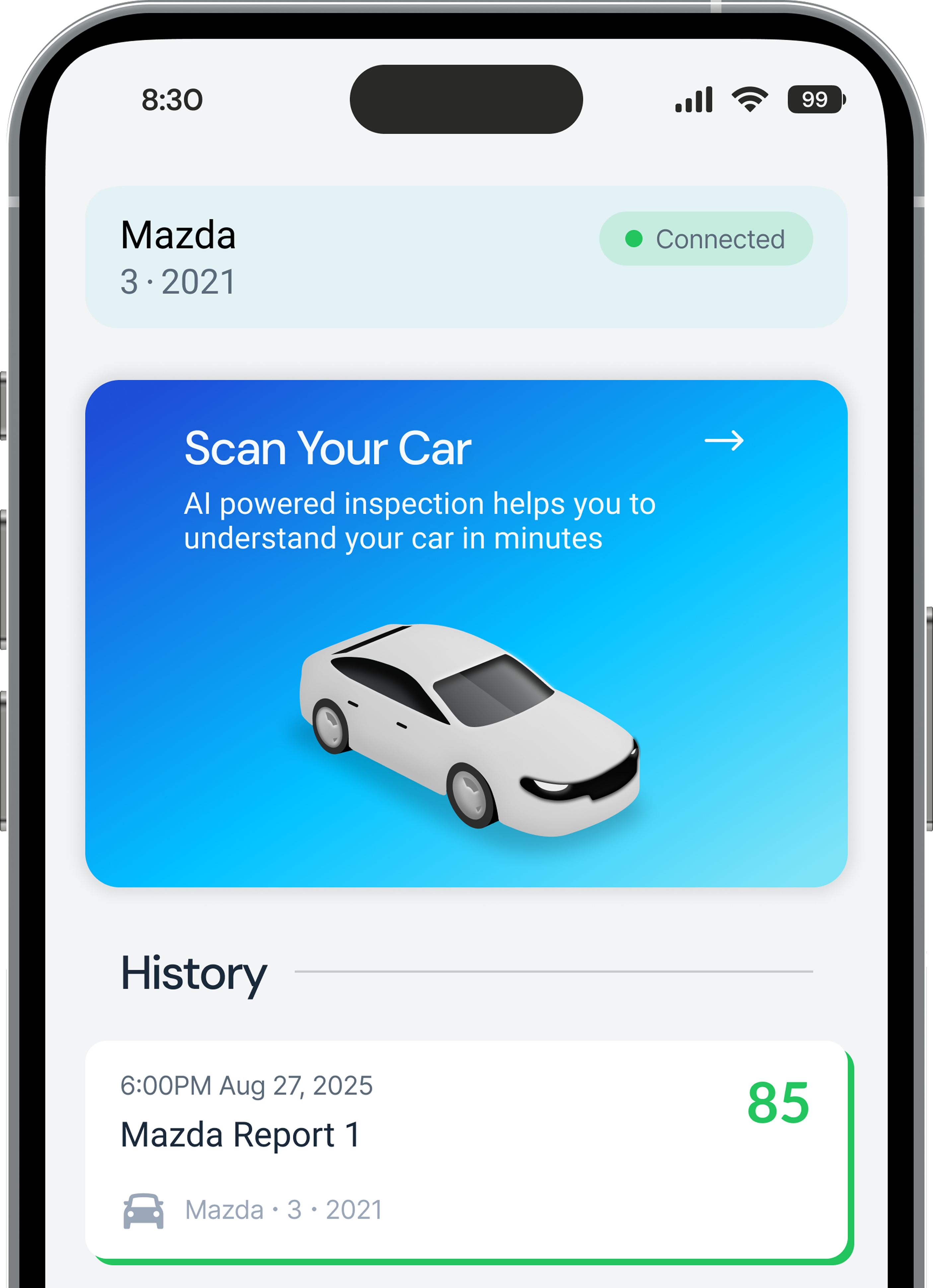
Before rushing to a repair shop, let’s walk through a simple step-by-step process to find the cause yourself using an OBD2 scanner or CarMind’s AI mode.

Step 1 — Identify When the Vibration Happens

Pay attention to when you feel the shaking:

  • At low speeds: usually tire or wheel issues.
  • At highway speeds: could be tire balance, alignment, or worn suspension.
  • Only under acceleration: often an engine or transmission issue.
  • While braking: likely a warped brake rotor.

👉 Write down the conditions—it helps narrow down the root cause later.

Step 2 — Check Tires and Wheels

Start with the simplest causes:

  • Inspect your tire tread for uneven wear or bulges.
  • Make sure your lug nuts are tight.
  • If you recently hit a pothole, your wheel might be slightly bent.
    These are the most common reasons for vibration at speed.

Step 3 — Scan for Engine or Transmission Issues

If the vibration happens only during acceleration or idling, connect your OBD2 scanner.
Common trouble codes include:

  • P0300–P0306: Engine misfire on one or more cylinders.
  • P0171/P0172: Air-fuel mixture too lean or too rich.
  • P0740–P0799: Transmission torque converter or shift solenoid issues.

With CarMind, you don’t need to interpret these codes yourself.
The AI automatically explains what each code means, how serious it is, and whether it’s safe to keep driving.

Step 4 — Check Live Data for Misfire or Fuel Issues

Go deeper with live data to spot issues before they become severe:

  • Misfire counts (see which cylinder is shaking)
  • Fuel trim values (detects imbalance in air/fuel mixture)
  • Engine load and RPM during vibration

💡 CarMind’s AI mode can analyze these parameters for you and show whether the vibration is mechanical (like tires) or engine-related.

Step 5 — Inspect Suspension and Brakes

If you’ve ruled out the engine:

  • Look for worn control arm bushings or ball joints.
  • Check for warped brake rotors if the vibration happens while braking.
  • Bad wheel bearings can also cause vibration and humming noise.

These are harder to test without tools, but you can identify symptoms before visiting a shop.

Step 6 — Let AI Summarize and Plan the Next Step

After scanning, CarMind’s AI report gives you:

  • All detected trouble codes
  • Clear explanations of each issue
  • Estimated repair costs

You’ll know exactly what’s wrong before stepping into a repair shop—so you won’t get overcharged or misled.

Conclusion

A shaking car is more than just annoying—it’s a sign something needs attention.
By combining an OBD2 scanner with CarMind’s AI diagnostic system, you can spot the cause early, avoid unnecessary repairs, and drive confidently knowing your car is in good shape.

Step into the future of car care!

Find the right job faster with AI-powered matching, real-time updates, and powerful insights.

Check Icon

Check your car's health

Check Icon

Identify hidden issues

Get 50% off today