.png)
October 31, 2025
I’ve worked at an auto repair shop for about 10 years. A friend of mine recently asked me for a simple checklist on what to look for when checking a car before buying, and I figured I’d share it here — catching issues early can save you a lot of money and stress later.
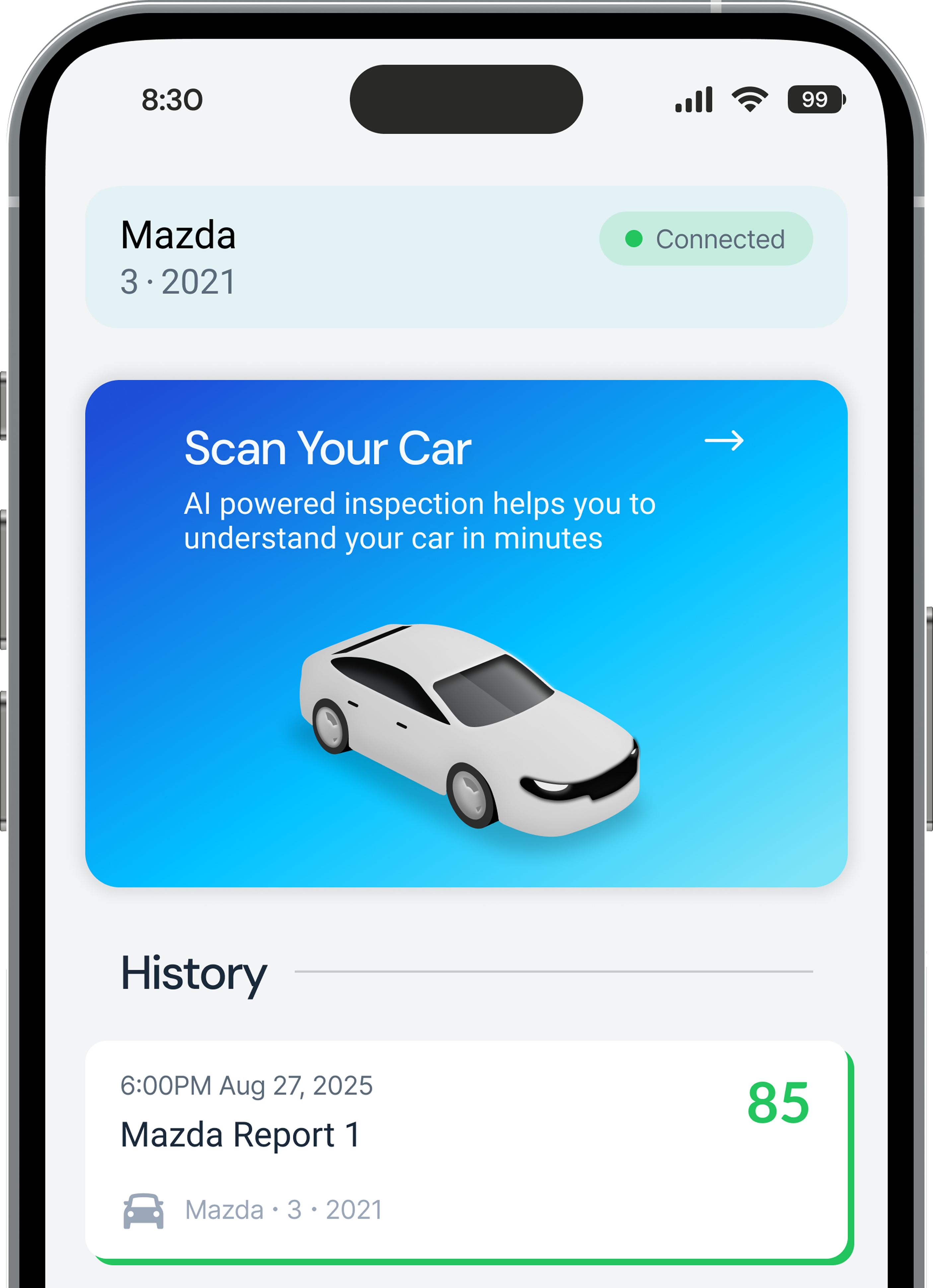
Over the years, I’ve seen so many people walk into the shop after buying a used car that looked “perfect,” only to find out it had thousands of dollars in hidden repairs. That’s exactly why I built CarMind , an app designed to help regular drivers inspect cars like a mechanic — without needing any tools or car knowledge.
Here’s the checklist I gave my friend (and what CarMind actually automates for you):
Even if no warning lights are on, the car can store “hidden” trouble codes.
I always plug in a small OBD scanner — lately I’ve been using one that connects to my phone via Bluetooth and syncs directly with the CarMind app.
CarMind uses AI to translate complex car data into plain English, so even people with zero car knowledge can understand what’s going on. It also gives an estimate of repair cost and problem severity — so you’ll know immediately whether it’s a small fix or a deal-breaker.
This single step has saved dozens of my customers from buying cars with thousands in hidden issues.
Check the vehicle history – Use the VIN to see if the car’s been in accidents, had flood damage, or was totaled before. A quick report can reveal things the seller might not mention.
Especially if you live in areas with snow or near the ocean. Surface rust on body panels is usually fine, but frame rust is expensive and dangerous.
If possible, crawl under the car with a flashlight — or better yet, take photos and upload them to CarMind’s AI inspection feature (coming soon) to get quick feedback.
Drive at different speeds, listen for knocks or squeaks, and pay attention to how the steering and brakes feel.
Try a safe hard brake to check for vibrations or pulling to one side.
👉 With CarMind live sensor data, you can even record OBD data during your test drive to detect irregularities like misfires or poor fuel trim.
Even without tools, you can check:
CarMind’s guide section walks you through these checks step by step, showing pictures of what’s normal and what’s not — perfect for beginners.
These are all things you can do in less than half an hour, even without mechanical experience.
A careful inspection before buying can save you from unexpected repair bills and a lot of headaches.
If you want to make it even easier, try CarMind — the AI-powered car inspection assistant that helps you:
CarMind turns every driver into a smart car inspector.
Try it before you buy your next used car — it could easily save you thousands.
.png)
.svg)